Red light therapy shows up in skincare conversations almost as often as recovery ones. Here's what it can realistically do for skin, and what to expect if you try it.
What it's meant to do
Red and near-infrared light is thought to stimulate collagen production and support skin repair at a cellular level, which is why it's used for fine lines, tone and general skin health.
What a realistic timeline looks like
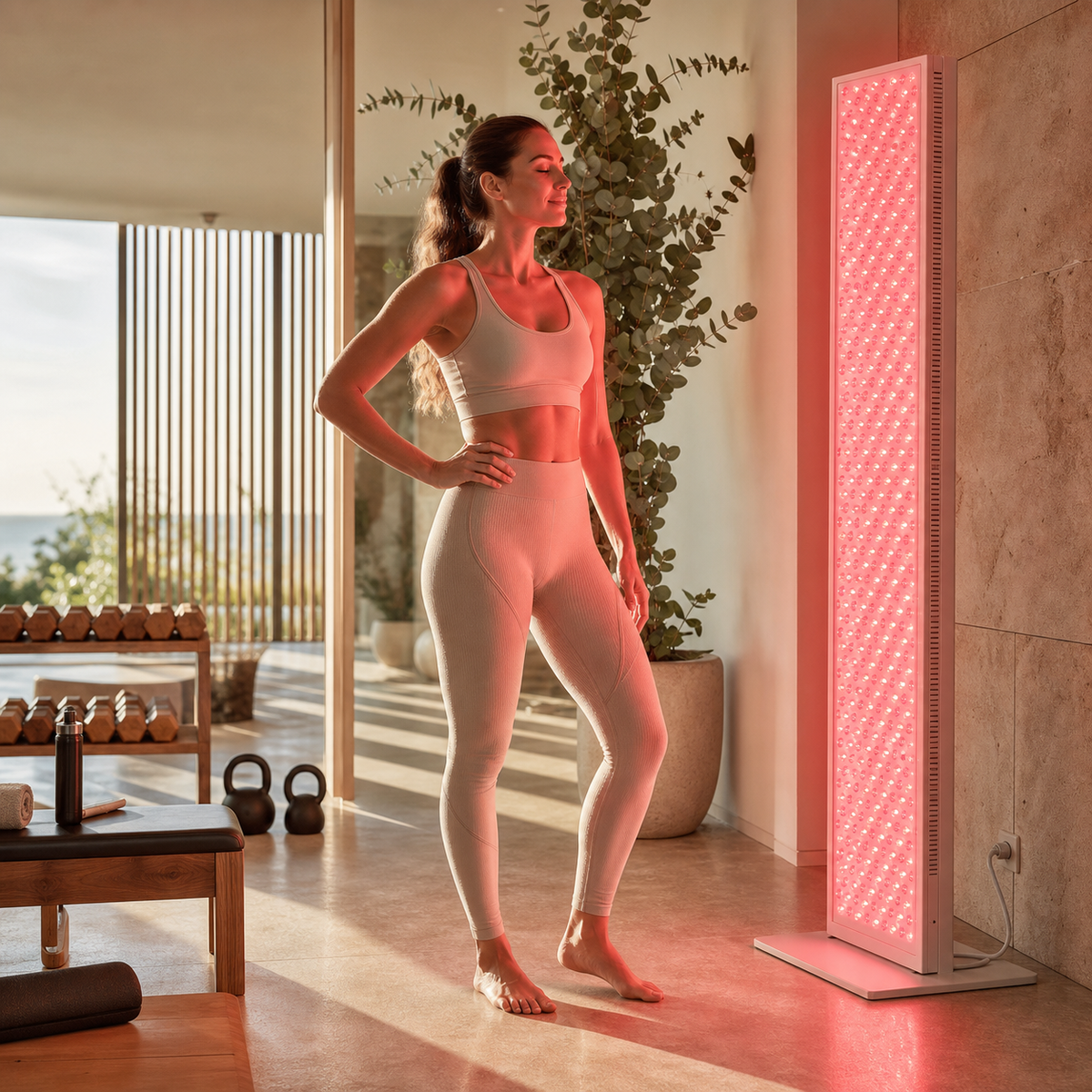
This isn't an overnight change. Most people using a panel like the Radiant Arc Panel System a few times a week report noticing subtler skin texture and tone changes after 8-12 weeks of consistent use, not days.
How to use it for skin specifically
Positioning matters — closer, direct exposure to the treatment area for 10-15 minutes per session is a common starting protocol. Consistency across weeks matters more than any single long session.
Set realistic expectations
Red light therapy is a supportive tool, not a replacement for sun protection, hydration or a broader skincare routine — think of it as one part of a bigger picture rather than a fix on its own.
See the panel and stand options in the Radiant Arc Panel System listing.

Leave a comment
This site is protected by hCaptcha and the hCaptcha Privacy Policy and Terms of Service apply.