
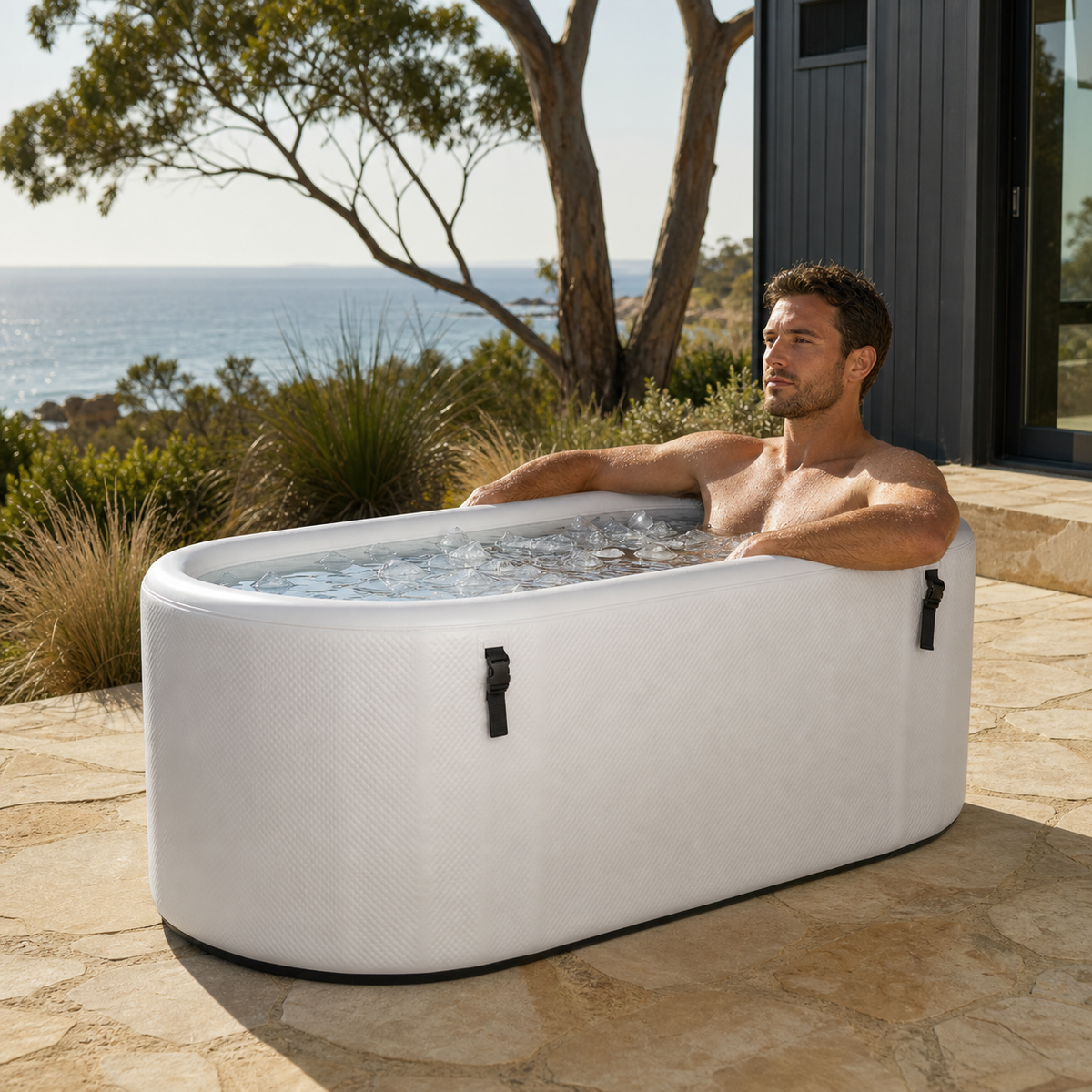
The appeal of cold water immersion goes beyond "it wakes you up" — there's a real nervous system response behind it.
The initial shock response
Cold water triggers your sympathetic nervous system — the "fight or flight" branch — causing a spike in heart rate, breathing rate and alertness in the first 30-60 seconds. This is normal and expected; controlled breathing through this phase is a core part of learning to handle cold exposure.
The calm that follows
Once you settle into the cold and your breathing steadies, many people report a shift toward parasympathetic activation — the "rest and digest" state — once they step out. This swing from acute stress to calm is part of why regular cold exposure is linked to improved stress tolerance over time.
Building tolerance safely
Start with shorter exposures — 30-60 seconds — and build up gradually rather than pushing for a long session early on. A longer, more reclined tub like the Longshore Inflatable Ice Bath can make those early sessions more comfortable while you build tolerance.
See the full range in our Ice Baths & Cold Plunge Tubs collection.


Leave a comment
This site is protected by hCaptcha and the hCaptcha Privacy Policy and Terms of Service apply.