
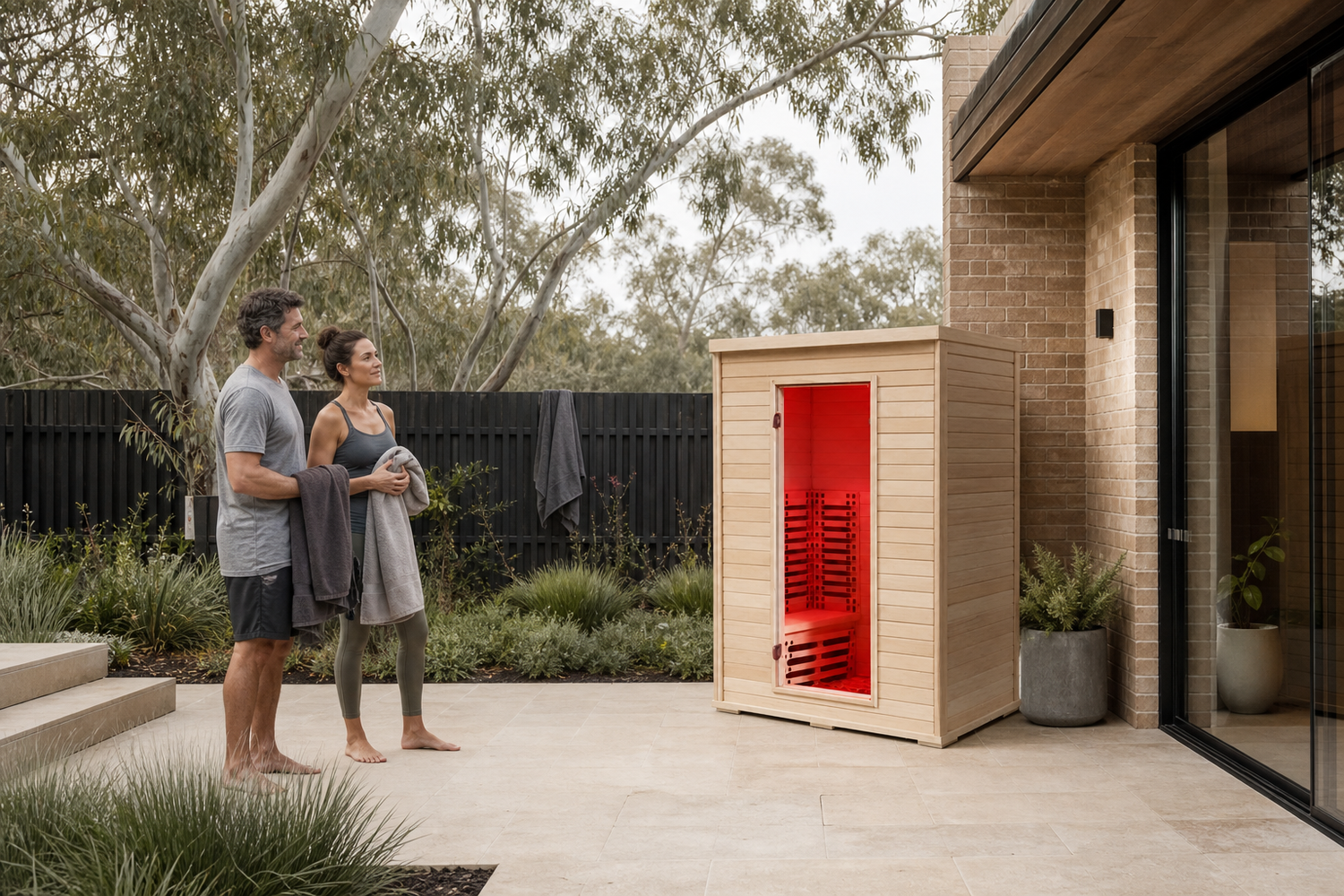
The best sauna is not simply the hottest or the one with the longest specification list. It is the one that fits your home, your available power and the way you actually want to use it.
For Australians comparing an infrared sauna vs traditional sauna, the decision often comes down to four things: the character of the heat, installation, warm-up time and the ritual you want to create.
Infrared sauna vs traditional sauna at a glance
| Consideration | Infrared sauna | Traditional sauna |
|---|---|---|
| How it feels | Direct radiant warmth with a generally lower air temperature | Hotter surrounding air; may include water on stones for humidity |
| Warm-up | Often faster, depending on model | Usually needs more time to heat the room and stones |
| Home installation | Can be straightforward, but electrical and placement requirements still matter | May require more involved electrical, ventilation and heat-resistant planning |
| Best for | A gentler, convenient everyday ritual | A classic high-heat sauna experience |
Choose the heat you will genuinely use
Traditional sauna enthusiasts value intense air heat and the sensory ritual of heated stones. Infrared sauna users often prefer a lower-temperature environment that still feels deeply warm. Neither experience is objectively better; the useful question is which one feels inviting on an ordinary Tuesday evening.
Start with the Australian home, not the showroom
Indoor placement
Measure the room, doorways and turning points along the delivery route. Check floor loading, clearances, ventilation and proximity to the required power supply. Leave practical space to open the door, cool down and keep towels nearby.
Outdoor placement
An outdoor sauna should be specifically suitable for exterior use. Consider direct sun, wind-driven rain, drainage, salt air in coastal areas and the clearance required around the cabin. A shaded or sheltered position can make the space more comfortable through Australian summers.
Electrical planning
Never assume a sauna can use any available outlet. Follow the manufacturer’s electrical requirements and use a licensed Australian electrician where required. Confirm this before delivery, not after the cabin reaches the driveway.
Think in routines, not occasional spa days
Picture the exact moment you will use the sauna. Is it a 20-minute transition after an early run? A quiet evening reset? A shared weekend ritual? Capacity and placement should support that moment.
A one-person model such as the Solace Full-Spectrum Infrared Sauna can suit a smaller wellness room. The Cove Indoor Infrared Sauna offers more capacity indoors, while the Horizon Outdoor Infrared Sauna creates a dedicated garden destination.
What about sauna benefits?
Sauna research is promising, but much of the long-term evidence relates to Finnish sauna bathing. A systematic review found potential benefits across cardiovascular, pain and quality-of-life outcomes while concluding that evidence was insufficient to recommend one sauna type for a particular clinical condition.
That is why we position sauna as a supportive wellness ritual rather than a medical promise. The immediate value is easier to describe: warmth, stillness and a reason to stop carrying the day.
Your pre-purchase checklist
- External dimensions and internal capacity
- Delivery access from street to final position
- Indoor or outdoor suitability
- Power requirements and electrician input
- Ventilation, clearances and floor suitability
- Cleaning and maintenance expectations
- Warranty terms and access to replacement parts
The decision
Choose a traditional sauna if the classic high-air-temperature experience is essential to you and your home can support the installation. Choose infrared if you want a more approachable heat, convenient warm-up and a cabin designed to become part of everyday life.
The right answer is the one that turns an empty corner, spare room or courtyard into a place you consistently return to.

Leave a comment
This site is protected by hCaptcha and the hCaptcha Privacy Policy and Terms of Service apply.