
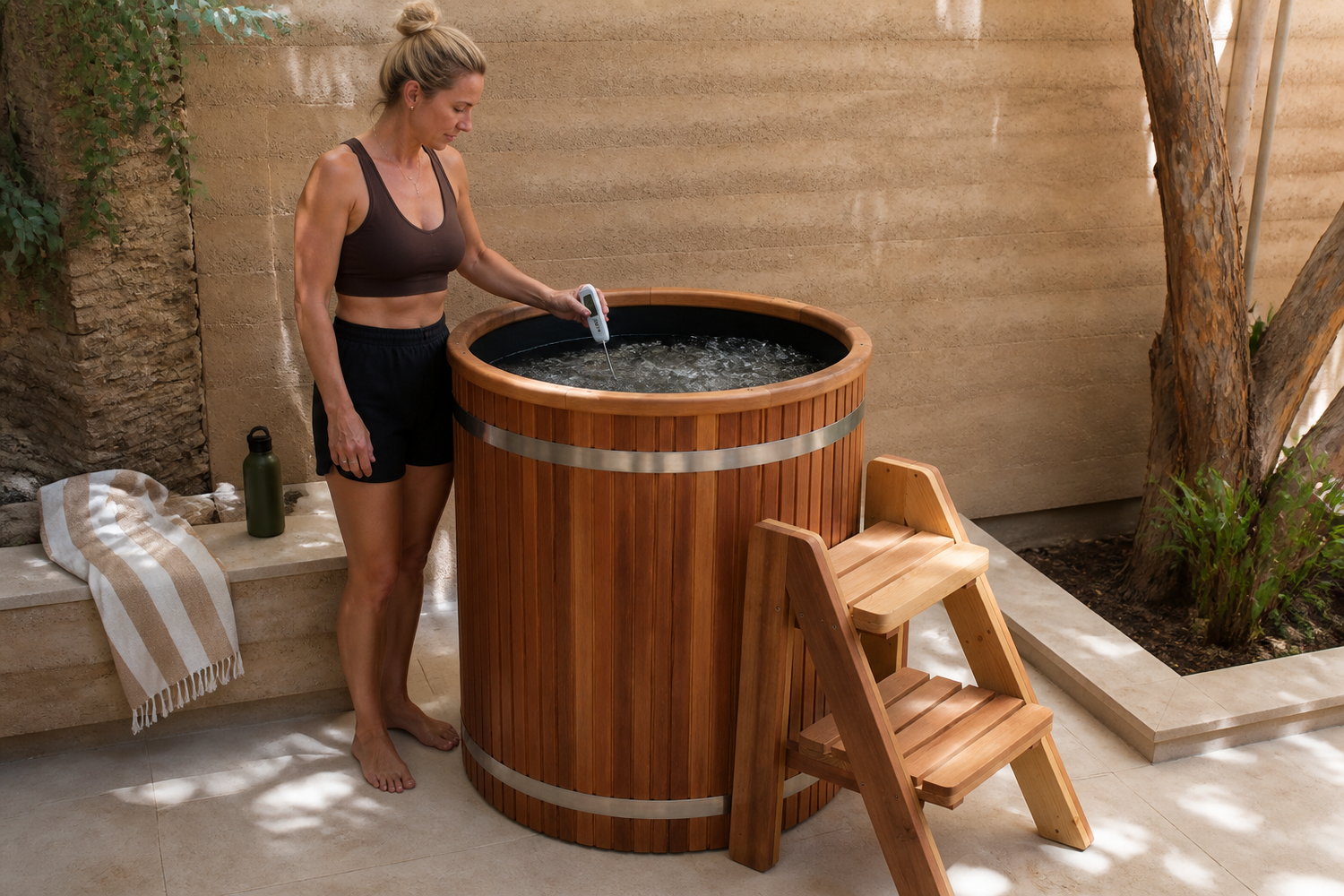
When people ask how cold an ice bath should be, they are often looking for one heroic number. The safer answer is a range, combined with time, experience and individual health.
For a beginner, an ice bath should feel controlled—not like a test of survival.
The Australian starting point
Royal Life Saving Society – Australia states that 10–15°C is generally considered an appropriate range for most individuals and that colder water increases stress and risk. The Australian Institute of Sport also maintains cold recovery pools at 15°C, which is a useful reminder that effective cold water does not need to be near freezing.
These figures are guidance, not a prescription. Your health, experience and supervision matter. Seek medical advice before cold-water immersion if you are pregnant, have a heart or circulatory condition, high blood pressure, Raynaud’s disease, a serious or chronic illness, or take medication that may affect your response.
Before the first plunge
- Choose a stable setup. Place the tub on a flat surface and confirm it is safe to enter and exit when wet.
- Measure the water. Use a reliable thermometer rather than estimating from the amount of ice.
- Make the exit easy. Put a towel, dry clothing and footwear within reach.
- Tell someone. Beginners should not treat cold water as a solo endurance challenge.
- Skip alcohol and breath-holding. Never deliberately hyperventilate or submerge the head.
How long should a beginner stay in an ice bath?
There is no prize for lasting longer. Start with a brief exposure that allows you to keep control of your breathing and exit confidently. Acclimatisation should be gradual. The colder the water, the more conservative the exposure should be.
Research protocols for exercise recovery often use defined temperatures and times, but study conditions are not personal instructions. An updated meta-analysis found short and medium immersions useful for soreness, while longer exposure did not automatically produce better delayed results.
A calm entry sequence
- Pause before entering and settle your breathing.
- Step or sit in slowly with a secure point of contact.
- Keep your head and neck above the water.
- Expect an initial gasp response, but do not force a breath hold.
- Focus on a slow exhale and leave immediately if you feel dizzy, confused, numb, panicked or unwell.
Australian climate changes the setup
In a Queensland summer, tap water and direct sun can make temperature management very different from a winter morning in Victoria. Shade, an insulated cover and a chiller can make the routine more consistent. In cooler months, the same settings may feel considerably more intense.
A Tidemark Ice Bath Thermometer & Timer helps replace guesswork with a measured routine. The Current Mini Ice Bath Chiller can help manage temperature without continually loading the tub with ice.
After the ice bath
Exit carefully because cold legs and wet surfaces can affect balance. Dry off, change into warm clothing and allow your body to warm gradually. Stop and seek help if you experience ongoing confusion, chest pain, severe shortness of breath or other concerning symptoms.
Choose the right tub
For a flexible first setup, the Longshore Inflatable Ice Bath offers a long, open format. The Cedar Tide Wooden Cold Plunge suits a permanent architectural space with upright immersion.
Safety resources
Read the full Royal Life Saving cold-water immersion position statement and the Australian Institute of Sport recovery-centre overview.
The beginner’s rule
Measure first. Start warmer. Stay shorter. Keep your head out. Leave while you still feel composed. A good cold ritual should build confidence, not reward recklessness.

Leave a comment
This site is protected by hCaptcha and the hCaptcha Privacy Policy and Terms of Service apply.